We’ve been saying it to every client this spring: this summer is going to be a tough one for your plants. Connecticut is already tracking drier than normal, and once the heat locks in, things can go downhill fast, especially if you put in new sod, seed, or plantings this year.
We see it every summer. Homeowners spend money on a new patio surround, fresh plantings, or a full lawn install, and then lose half of it by August because watering got inconsistent. We don’t want that to happen to you. So here’s what we tell our own clients.
Water Deeply, Not Frequently
This is the one thing we’d want every homeowner to take away from this post. A quick five-minute spray every evening isn’t watering your plants. It’s just wetting the top of the mulch. Roots follow moisture. If the water never gets deep, the roots never go deep, and you end up with a lawn and landscape that wilts the moment it goes a few days without rain.
One good long soak is worth more than three short sprinkles. Give the water time to actually push through the mulch and into the soil. You’ll know you’ve done it right when the ground feels damp several inches down, not just at the surface.
The rule of thumb: Landscapes need about an inch of rain per week. If the sky isn’t delivering it, you need to. And 30 minutes of water every day will serve you far better than two hours once a week.
Water In The Morning
We know evenings are easier. You’re home, you’ve got time. But watering at night leaves your lawn and plants sitting wet for hours, which is basically an open invitation for fungal disease. By watering in the morning, ideally before 9am, you’ll let moisture soak in while it’s cool, and the foliage will dry out naturally as the day heats up.
What Watering Method To Use
For Planting Beds, Shrubs, and Trees
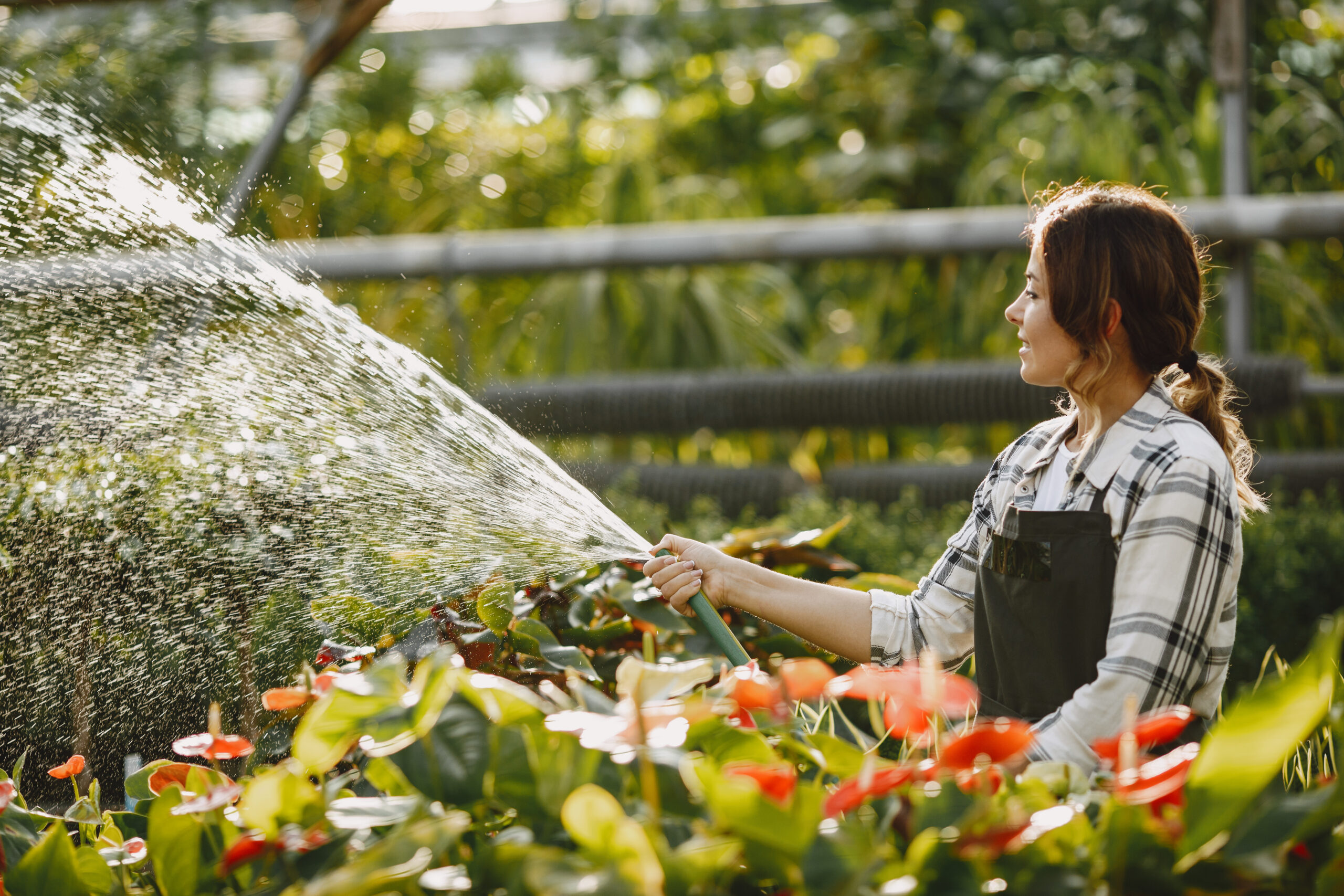
Soaker hoses or drip irrigation are the way to go. They put water right at the root zone, nothing gets wasted, and you can set them on a timer and stop thinking about it. If you’re hand-watering, get the hose low and let it run slowly at the base
For New Sod or Seeded Lawn
An oscillating or impact sprinkler gives you the coverage you need. Set it to a gentle mist rather than a hard spray. You want the soil to soak, not the seed to wash away. Watch for puddling; when water starts sitting on the surface instead of soaking in, it’s time to shut it off.
Don’t Skip the Mulch
If your planting beds aren’t mulched, you’re losing moisture faster than you think. Two to three inches of mulch keeps the soil cooler, slows evaporation, and cuts down on how often you actually need to water. It makes a bigger difference than most people realize.
Best Practices for New Plants
Newly installed shrubs, trees, and perennials are not low-maintenance, at least not yet. They haven’t had time to establish a root system, so they’re entirely dependent on you for water. Here’s how to take care of them:
- Water at the base, not overhead. Spraying water on leaves in direct sun can scorch them, and it doesn’t do much for the roots anyway.
- Water deeply once in the morning. One good long soak beats a few quick hits throughout the day.
- Before you water, stick your finger a few inches into the soil. If it’s still damp, skip it. Overwatering is a real thing and it’s just as harmful as drought stress.
- If you notice leaves wilting or going a dull blue-gray color, even in the morning before it gets hot, that’s your plant telling you it’s thirsty. Don’t wait on it.
New Sod or Seed: Treat it Like it’s Fragile
Because it is. A newly seeded lawn can die in a single hot day if it dries out completely after germination has started. We’re not trying to scare you; we just want you to understand the stakes.
- Water twice a day for the first few weeks: once in the morning, once in the late afternoon.
- Each cycle should run 20–30 minutes, enough to soak the top couple inches of soil.
- If you’re going through a stretch of real heat with zero rain, sneak in a short midday watering too.
- Use a mist or gentle shower setting. Never hold a hose on one spot or use a hard spray, or else you’ll wash the seed right out.
Something we always hear: “I think my lawn needs more fertilizer.” Nine times out of ten, it actually just needs more water. Don’t reach for the fertilizer bag until you’ve ruled out drought stress.
How to Tell if Your Landscape is Stressed
You don’t always need a moisture meter. Here are the signs to look for:
- Walk across your lawn. If your footprints are still visible a few seconds later, the grass isn’t bouncing back. This is a signal that it probably needs water.
- Look at the color. Grass that’s turning a dull blue-gray or purple cast is telling you it’s dry.
- Check your plants in the morning. If they’re wilting before 9 a.m., before the heat of the day even hits, they’re drought-stressed, not just hot.
- Feel the soil. Pull back a little mulch. If the soil underneath is dry and pulling away from the edges of the bed, it’s time to water.
Tip: Not sure what you’re working with? Check the US Drought Monitor weekly — it’ll give you a picture of conditions in your area and help you adjust.
You spent real money on your landscape. Watering it consistently, even imperfectly, will do more to protect that investment than almost anything else. If you’ve got questions about what your specific plants need, or you’re thinking about an irrigation system to take the guesswork out of it, reach out to us. We’re happy to talk through it.