
A fire feature changes how you use your patio. It stretches your outdoor season into the fall, gives everyone a reason to linger after dinner, and turns a plain backyard into the spot where people actually want to be.
But “add a fire feature” isn’t a single decision. Fireplaces and fire pits are two different structures with different costs, footprints, and fuel options, and picking the wrong one for your space (or your lifestyle) is an easy mistake to make. Below, we break down how to choose between them, plus the fuel options and alternatives worth knowing about before you build.
Want a ballpark number before you read further? Try our free Cost Calculator to see what a fire feature might run for your yard.

Fire Pit or Fireplace: What’s the Difference?
Fire Pits
A fire pit is built for gathering around. It’s the natural center of gravity for a backyard full of kids roasting marshmallows or friends staying late after a cookout. If you want an interactive, casual feel, a fire pit usually wins.
A few things to know:
- No chimney needed, but fire pits can produce real smoke, so placement matters. A landscape designer can help position it so smoke doesn’t end up blowing into seating areas or toward the house.
- They’re flexible. A fire pit can be built to match almost any style and can go virtually anywhere on the patio.
- They cost less. Simpler construction and fewer materials generally make fire pits the more budget-friendly option.
Fireplaces
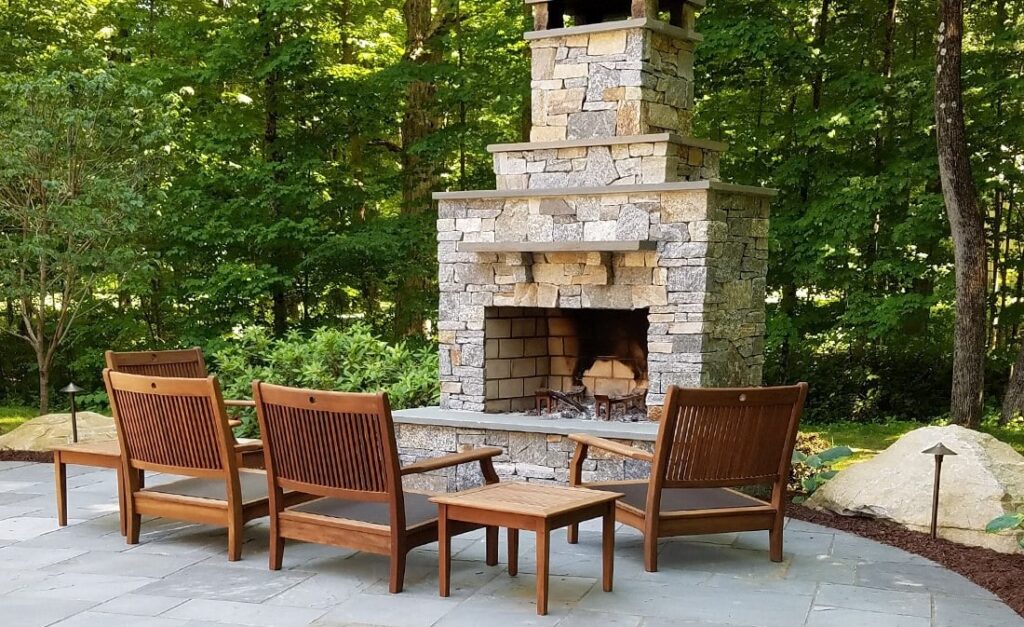
A fireplace is built for gathering in front of. It creates a more polished, architectural feel and works well as a focal point rather than just a gathering spot.
A few things to know:
- Smoke has to go somewhere, so a chimney is required. The upside is that a fireplace can be built into a covered patio, pergola, or pavilion and still function well in bad weather.
- They can do double duty. Many homeowners mount a TV above the fireplace, combining warmth with a real outdoor entertainment setup.
- They cost more. Between the chimney, ventilation, and design work, fireplaces are typically the pricier build. They also tend to add more resale value to a home than a fire pit does.
Wood vs. Gas: Choosing Your Fuel Source
Fireplaces are almost always wood-burning. Fire pits, on the other hand, give you a real choice.
Gas Fire Pits
Gas fire pits are the low-maintenance option. Flip a switch and it’s going, no ash to sweep, no wood to store, and no smoke to deal with (a real plus if anyone in the household has allergies or just doesn’t love smelling like a campfire afterward). It’s also fuel-efficient, though it typically won’t burn quite as hot as wood.
Before committing to gas, it’s worth checking two things:
- Fuel access. Can you tie into your home’s natural gas line, or do you have room for a propane tank that stays accessible for refills?
- Installation timeline. Running a gas line adds time upfront, generally up to 50% longer than a wood build. You make that time back later, since there’s no wood to chop, haul, or store, and no waiting for a fire to catch. Professional installation is strongly recommended to rule out leaks.
Note: While propane is smokeless, it can often leave behind a sooty residue on anything overhead, requiring extra maintenance that is sometimes unexpected. Natural gas is cleaner than propane, but may still leave behind soot overhead.
Want less smoke without going full gas? Low-smoke wood-burning inserts have become more widely available in recent years. They still produce some smoke, but noticeably less than a traditional wood fire.
Wood Fire Pits
If you’re in a wooded area or just enjoy the ritual of building a fire, wood is hard to beat. It takes a bit more effort to get going, but that’s part of the appeal for a lot of homeowners who want the space to feel a little more hands-on and a little closer to nature.
Wood fire pits are also generally less expensive to install since there’s no gas line or propane tank to account for. The tradeoff shows up later, in the time spent sourcing, storing, and using wood.
Already built and want to switch fuel types? Most fire pits and fireplaces can be retrofitted with a gas insert. Expect that upgrade to run $2,800–$6,000, depending on how far the gas line has to travel and how much existing stonework needs to come apart and be rebuilt.
Cost and Space: What to Budget For
Cost. Fire pits cost less across the board, from materials to labor. Fireplaces cost more upfront but tend to add more resale value. Generally, a fire pit will cost anywhere from $3,500 to $6,500 for an average size of about 4ft in diameter. A fireplace has a much larger price range, due to material costs, and can vary depending on chimney size, typically $24,000 to $50,000.
Note: Pricing is projected through 2027.
Space. A fire pit itself doesn’t take up much room, but it needs enough surrounding space for seating, which can add up. Fireplaces need less seating area since people gather in front rather than around, though chimney placement takes some planning. That’s also why fireplaces are usually built along the perimeter of a patio, while fire pits can go almost anywhere.
The Bottom Line
There’s no wrong choice here, just the right one for how you actually plan to use your outdoor space. If you want a casual gathering spot for family and friends, a fire pit is likely your best bet. If you’re after a polished focal point with an elegant feel, a fireplace probably makes more sense.
Because of the safety and design considerations involved, working with a landscape designer to plan and install your fire feature is the safest way to get it right the first time.